.png)
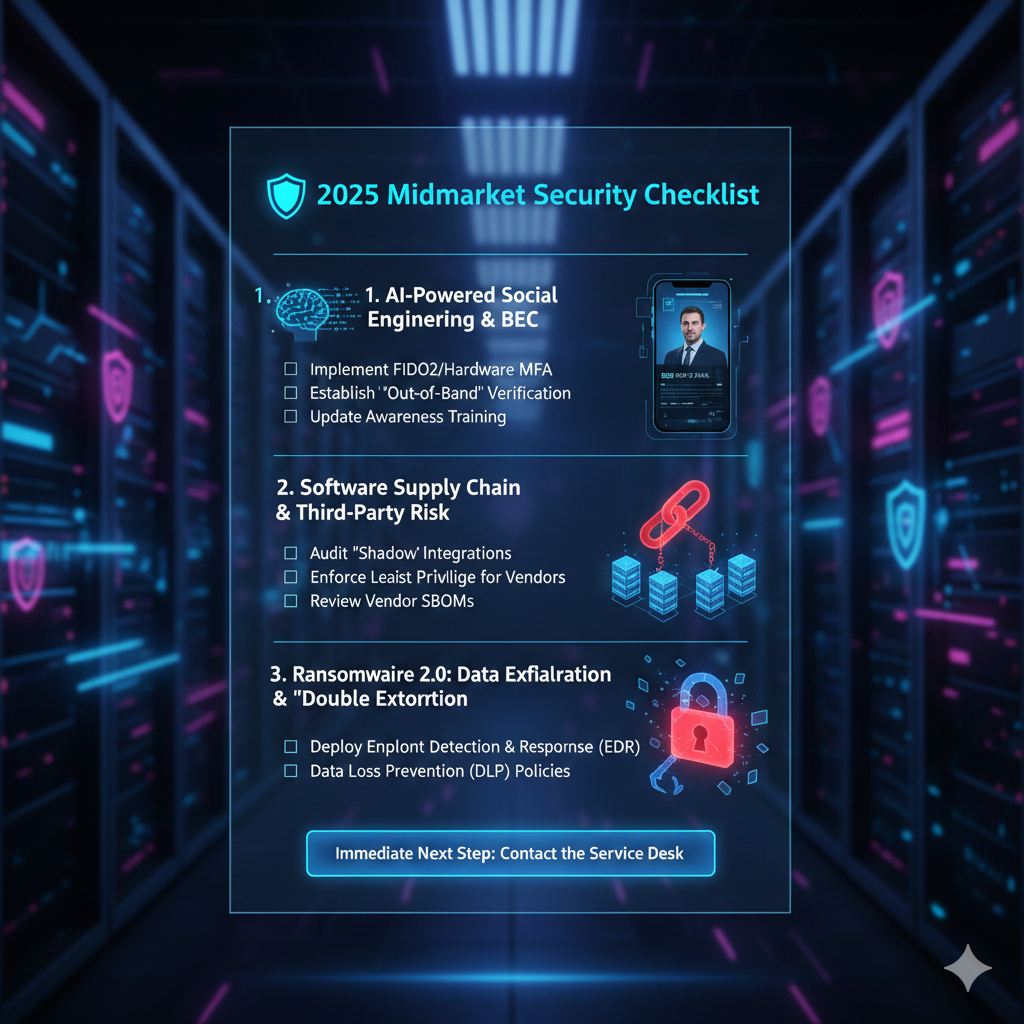
1. AI-Powered Social Engineering & BEC
- Attackers are using Generative AI to craft hyper-realistic phishing emails and "Deepfake" audio to impersonate executives (Business Email Compromise).
- Implement FIDO2/Hardware MFA: Standard SMS or app-based MFA is now easily bypassed by AI-driven proxy tools. Move high-privilege users to hardware keys (e.g., YubiKey).
- Establish "Out-of-Band" Verification: Mandate that any financial transfer or sensitive data request—even if it sounds like the CEO on a voice memo—must be verified via a second, pre-approved channel (e.g., a specific internal chat or a known phone number).
- Update Awareness Training: Transition from "spot the typo" training to "verify the intent" training, focusing on AI-generated deepfakes and emotional urgency.
2. Software Supply Chain & Third-Party Risk
- Midmarket firms rely heavily on SaaS and third-party vendors. Attackers are increasingly breaching smaller vendors to gain "backdoor" access to their midmarket clients.
- Audit "Shadow" Integrations: Use a CASB (Cloud Access Security Broker) or identity tool to find unauthorized third-party apps connected to your Microsoft 365 or Google Workspace environment.
- Enforce Least Privilege for Vendors: Review all service accounts held by external vendors. Ensure they have the minimum access required and that "Persistent Access" is disabled in favor of "Just-In-Time" (JIT) access.
- Review Vendor SBOMs: For critical software, request a Software Bill of Materials (SBOM) to ensure your vendors aren't using compromised open-source libraries (like the "mini-Log4j" incidents seen this year).
3. Ransomware 2.0: Data Exfiltration & "Double Extortion"
- Modern ransomware no longer just locks your files; it steals them. Even if you have backups, attackers threaten to leak sensitive client data if you don't pay.
- Deploy Endpoint Detection & Response (EDR): Traditional antivirus is insufficient against 2025's fileless malware. Ensure your EDR is configured to "Block" mode, not just "Alert."
- Immutable Backups: Ensure your backups are "Air-Gapped" or stored in an immutable format (WORM - Write Once Read Many) so attackers cannot delete or encrypt your safety net.
- Data Loss Prevention (DLP) Policies: Set up "canary" files or DLP triggers that alert security teams if large volumes of sensitive data (e.g., CAD files, PII, or financial spreadsheets) are being moved to an external IP.
Ready to strengthen your defenses? Don’t wait for a vulnerability to become a breach. If you need assistance implementing these security controls or want a comprehensive risk assessment, contact The Service Desk today to get started.
Share This Article To: